
Deep Research Is Not a Longer Answer
What separates a serious investigation from a polished response—and why depth should make evidence and uncertainty easier to inspect.
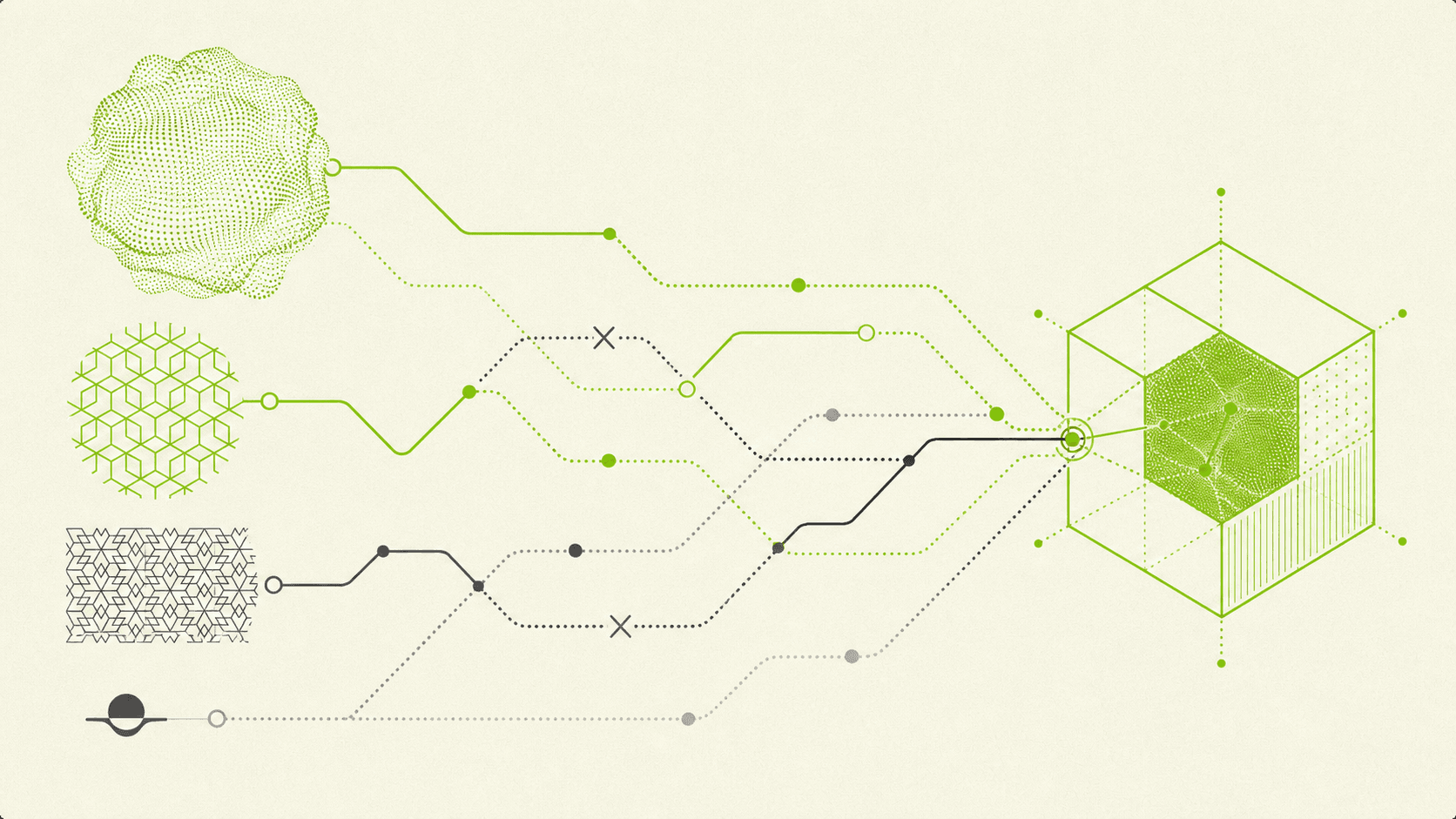
A long answer can still be shallow.
It can cite ten sources that repeat the same claim, smooth over a contradiction, or bury uncertainty beneath fluent prose.
Length is not depth. Confidence is not coverage. A reference list is not proof that an investigation happened.
Deep research should do something harder: expand the search, test the emerging explanation, and leave behind a trail another person can inspect.
That changes the job of a research agent.
Its purpose is not to write more. Its purpose is to investigate better.
Search finds material. Investigation changes the question
Ordinary search begins with a query and returns results. Investigation begins with a question and develops a plan.
The distinction matters because difficult questions are rarely stable.
An early paper may introduce the dominant explanation. A later study may expose a boundary condition. A clinical registry may reveal that the promising idea never survived contact with reality.
Each finding should shape the next search.
A serious research agent breaks the question into parts, decides what evidence each part requires, and searches iteratively as the picture changes.
It should notice when a phrase is too broad, when a term has several meanings, and when a missing source type could distort the conclusion.
The work resembles inquiry more than retrieval:
- Frame the question and its assumptions.
- Identify the evidence needed to answer it.
- Search across relevant source types.
- Follow contradictions, gaps, and unexpected leads.
- Revise the explanation as stronger evidence appears.
The report is the result of this process, not a substitute for it.
Source diversity is not optional
One database can be authoritative and still be insufficient.
A paper library may explain a mechanism. PubMed may show how it has been tested. A trial registry, patent record, or technical report may change the practical meaning of the published literature.
The right mix depends on the question.
For a biomedical investigation, papers alone may overrepresent positive findings. For an emerging technology, the open web alone may reward novelty over rigor.
Deep research must cross those boundaries without flattening every source into the same kind of evidence.
A peer-reviewed result, a registered trial, and a company announcement can all be relevant. They do not carry the same weight.
The agent should make those differences visible rather than letting citation count stand in for judgment.
A serious report exposes its trail
The polished paragraph is the least inspectable part of an investigation.
What matters is whether the reader can see how the work was assembled.
Oy Deep Research plans the investigation, expands searches as evidence arrives, cross-checks important claims, and produces a structured report with citations attached.
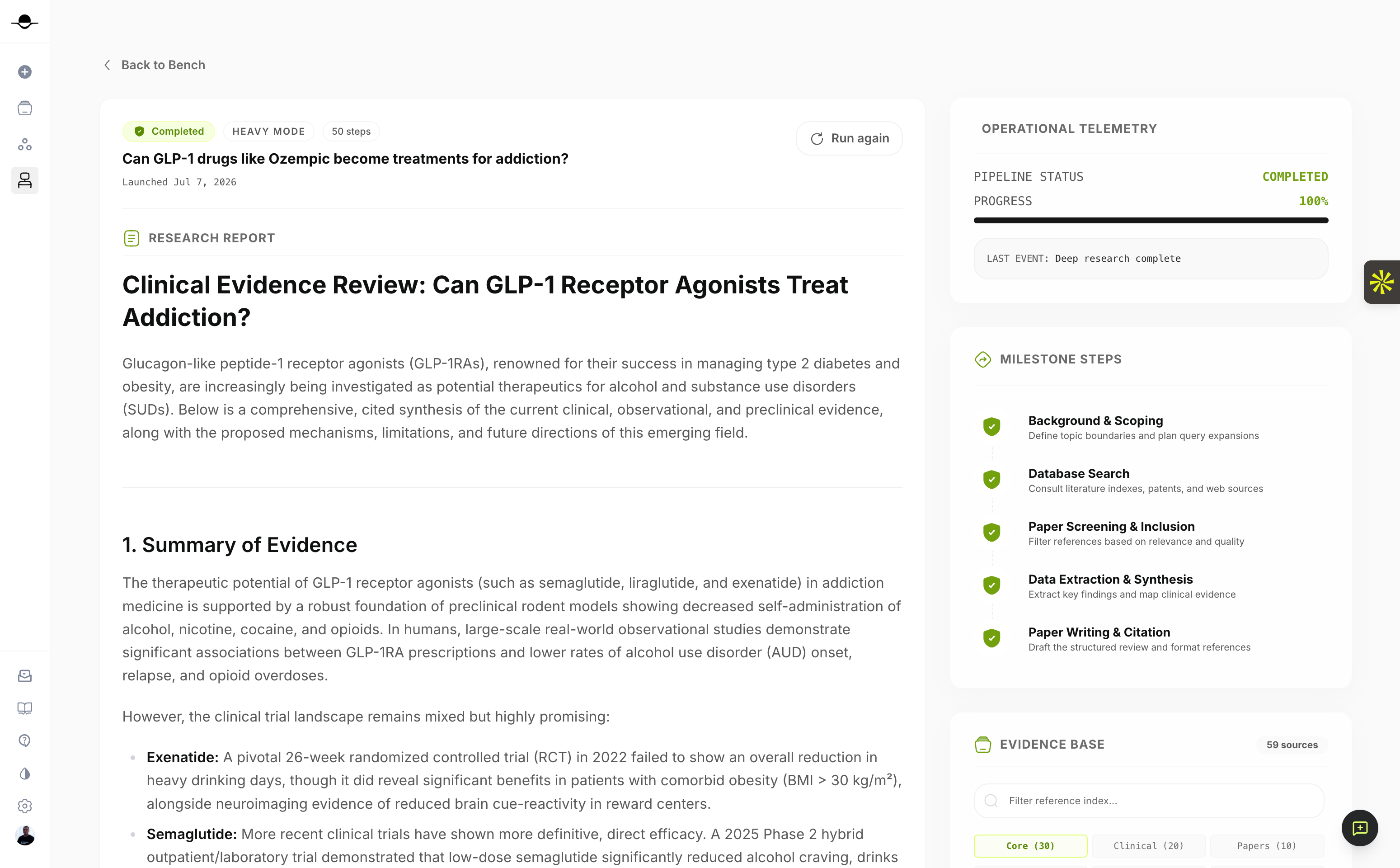
The report separates evidence from interpretation. It keeps limitations visible. It makes the reference index part of the result rather than an afterthought.
That trail serves two audiences.
The researcher can inspect the source behind a claim, challenge a weak step, and decide where more work is needed.
The reader can follow the argument without being asked to trust the system that produced it.
This is where citations become more than decoration. They are handles for verification.
Depth should make uncertainty clearer
Weak AI hides uncertainty because certainty reads well.
Strong research makes uncertainty more precise.
It can show that evidence is consistent but limited, that studies disagree for a known reason, or that the most important question has not yet been tested.
These are useful outcomes. A negative or conditional conclusion can prevent wasted work just as effectively as a breakthrough finding can inspire it.
Deep research should therefore surface:
- assumptions that shaped the search;
- important claims with thin support;
- disagreement between credible sources;
- missing data or inaccessible evidence;
- limits on what the report can responsibly conclude.
The goal is not to make the researcher feel certain. It is to make the state of the evidence legible.
The measure is what survives review
The easiest way to judge a research agent is to ask whether its output sounds impressive.
The harder and more useful test is whether the work survives inspection.
Can you find the evidence behind the central claim? Can you tell why those sources were chosen? Can you see what the investigation could not establish?
If not, the answer is merely long.
Oystack is building Deep Research for the standard serious work demands: investigation with breadth, synthesis with structure, and conclusions with a visible trail.
Because the point is not to generate more pages.
It is to know more—and to know exactly what you still do not know.

