
The Manuscript Is Part of the Research
Why research intelligence must continue into LaTeX authoring, compilation, revision, and the final human decision.
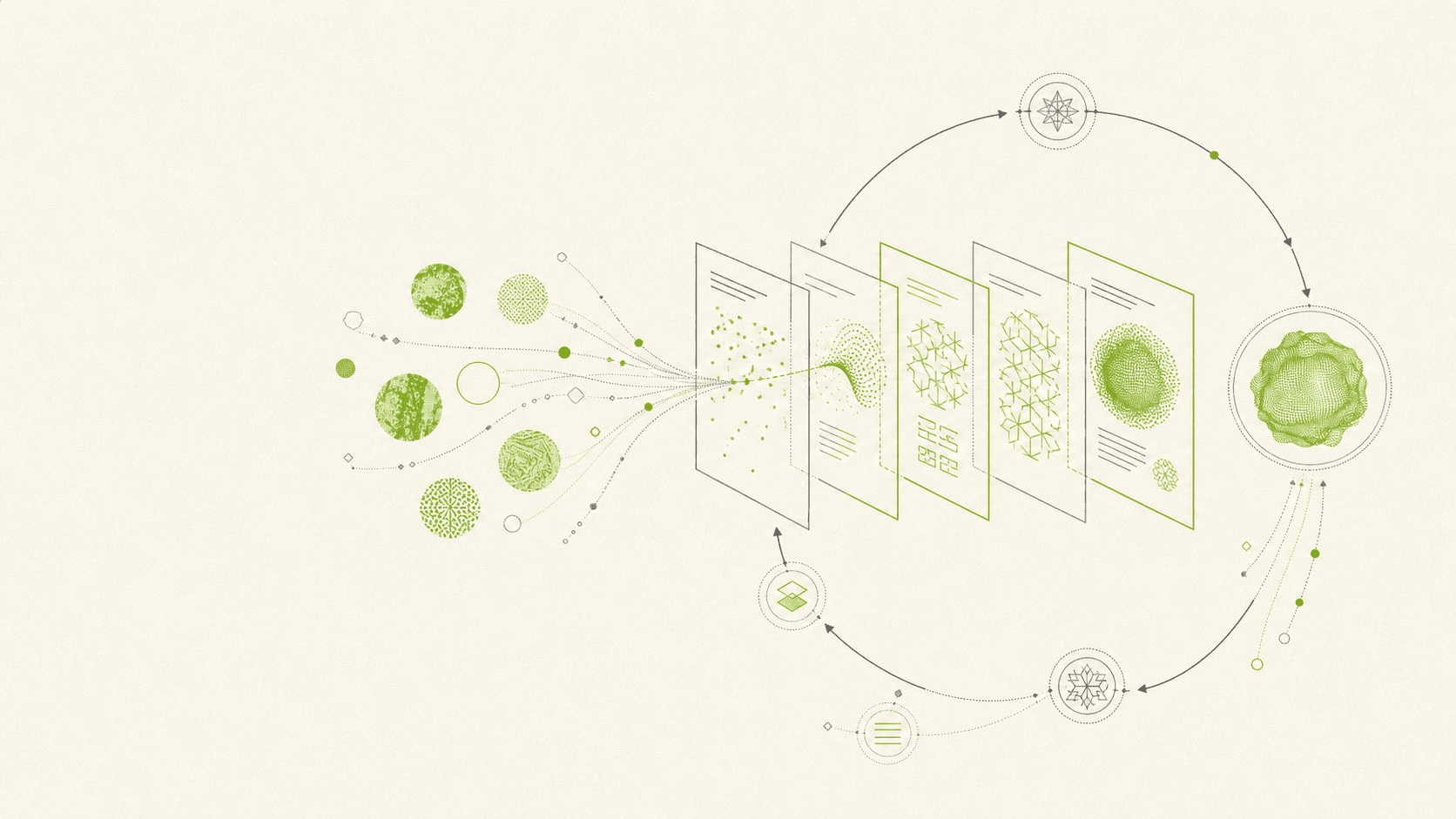
Research does not end when the answer arrives.
It ends—if it ends at all—when the evidence becomes a durable artifact another person can read, challenge, reproduce, or extend.
That makes the manuscript more than packaging. Writing is where claims become accountable.
A vague idea must become a precise sentence. A useful source must become a defensible citation. A hidden inconsistency must be resolved before the document can hold together.
If AI assists with research but disappears at this stage, the hardest handoff remains unsolved.
Writing is where evidence becomes accountable
Notes can tolerate fragments. Conversation can tolerate ambiguity. A manuscript cannot.
The moment a claim enters a paper, it acquires obligations.
Does the cited source support the exact sentence? Is the method described consistently? Do the figures, tables, and references agree with the text?
Writing forces these questions into the open.
It also creates a dangerous temptation for AI systems: produce fluent prose first and repair the evidence later.
Research writing needs the reverse.
The system should begin from the project, the source collection, and the citations already under review. It should help form the document without breaking the chain back to evidence.
An agent should work inside the project
A manuscript is not one text box.
A serious LaTeX project may contain chapters, figures, tables, bibliography files, custom commands, templates, and build settings.
An authoring agent must understand that structure before it touches the prose.
Oystack places the Project Agent inside a multi-file LaTeX workspace with the source collection close at hand.
It can inspect the project, search relevant papers, retrieve citation metadata, update the bibliography, and propose coordinated edits across files.
That is more useful than pasting generated text into an editor because the agent can reason about the artifact as a whole.
It also raises the standard for control.
The agent should know enough to act across the project. The researcher should still be able to see exactly what it wants to change.
Compilation is part of reasoning
In technical writing, a revision is not finished because the source looks plausible.
It must compile.
References have to resolve. Commands must be valid. Figures need to exist. Layout changes can expose problems that are invisible in plain text.
Compilation is therefore more than an export button. It is a test of whether the proposed document actually works.
The Oystack Project Agent can edit a candidate revision, compile it, read the diagnostics, repair errors, and compile again.
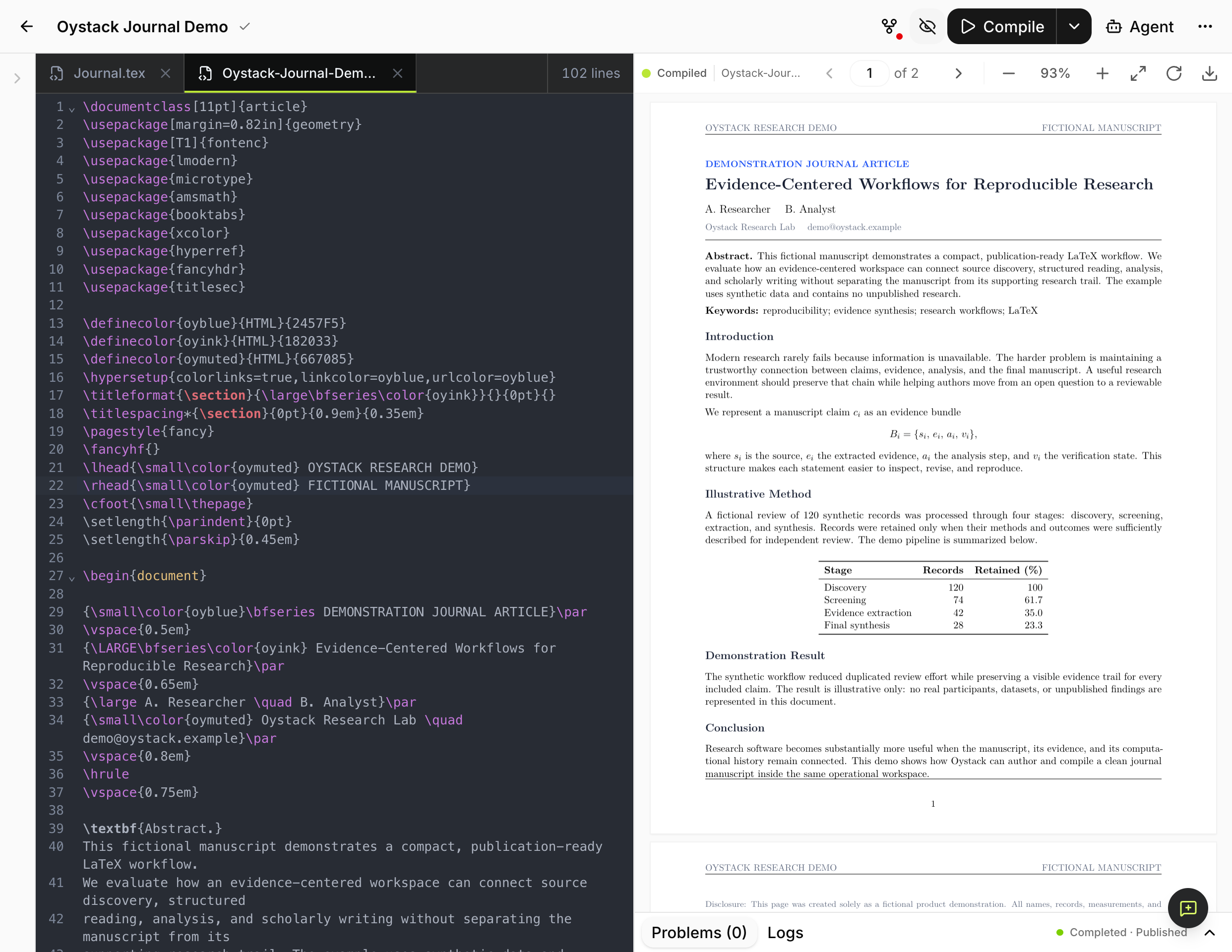
The screenshot above uses a fictional demonstration manuscript. The value is not the sample content; it is the closed loop between source, compiler, and rendered result.
That loop lets an agent move beyond autocomplete. It can pursue an outcome, observe what failed, and improve the candidate before asking the researcher to adopt it.
Review before adoption
An agent capable of changing an entire manuscript should not quietly overwrite the work and declare success.
Its changes should remain staged in a private revision.
The researcher can inspect the diff, review the candidate PDF, see compiler warnings, and decide whether to apply or reject the result.
This distinction matters.
AI assistance becomes safer when generation and adoption are separate events.
The agent may perform a complex sequence of actions. The final decision remains explicit, informed, and human.
That is agentic authoring with an audit trail.
The output must remain yours
A research system should not trap the artifact it helped create.
The final project should remain portable: compilable as a publication-ready PDF, exportable as a complete archive, and connectable to GitHub when versioned collaboration matters.
Ownership is not only about downloading a file. It is about keeping the project intelligible outside the system that assisted with it.
The sources, bibliography, figures, and LaTeX should still form a coherent manuscript.
AI can reduce the mechanical burden of research writing. It can find the relevant source, repair a reference, coordinate files, and diagnose a failed build.
But the manuscript is where the researcher makes a public claim.
That responsibility cannot be delegated invisibly.
The best authoring agent does not take the work away. It makes ambitious revisions possible while keeping evidence, changes, and judgment in view.
Research intelligence should follow the researcher all the way to the finished artifact.
Then it should leave them with work they can inspect, export, and stand behind.

